
超级管理员 Selection
OEM/ODM FFU Manufacturing: Buyer Questions
What OEM/ODM FFU buyers should ask—duty-point data, motor-to-box ownership, controls, certificates, MOQ, and a copy-paste RFQ that gets accurate factory quotes.
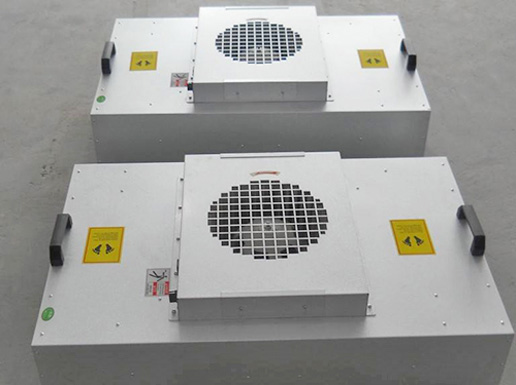
What should OEM/ODM FFU buyers ask a factory?
Ask whether the supplier can own the full duty point (airflow at final filter pressure drop, cabinet height, noise, voltage, control interface), whether they manufacture both core motor/fan platforms and complete FFUs, how private-label cosmetics interact with seals/coatings, and what documents map to the exact SKU — then lock MOQ, lead time, and spare-part strategy before negotiating the last cent of unit price.
OEM (your brand on their build) and ODM (their design adapted to your requirements) both fail the same way: a beautiful sample at clean-filter free air, followed by field units that miss airflow, fail integrity, or cannot talk to the BMS. The inputs have to be fixed up front: check every FFU at the full duty point — airflow, final filter pressure drop, cabinet height, noise target, voltage, and control interface. Neither a fan curve nor a housing drawing is enough on its own.
For OEM buyers, a signed-off logo proof does not replace any of those inputs.
OEM vs ODM in FFU projects (clear definitions)
OEM usually means you provide brand/requirements and buy production units; ODM usually means the factory contributes more design ownership while still meeting your interface and performance targets.
| Model | Who owns the design emphasis | Typical FFU buyer |
|---|---|---|
| OEM / private label | Buyer brand + factory build to agreed drawings/specs | Distributors, integrators, cleanroom contractors |
| ODM | Factory platform adapted to buyer constraints | Brands needing faster custom without full in-house design |
| Hybrid | Shared revisions after pilot | Most real projects after first PO |
Ask the factory which box they are actually quoting — mixed language in emails creates warranty disputes later.
Why vertical integration (motor → FFU) matters for OEM risk
When one factory owns the motor/fan platform and the complete unit, impeller clearance, inlet conditions, wiring conventions, and test methods stay in one accountable stack — reducing the classic three-vendor blame loop.
Senter Motor positions as a clean-power source manufacturer for EC/DC motor platforms and complete FFUs (modules including 1175×575, 1175×1175, 1175×875, 615×615). For OEM buyers, that stack is the product — not only the painted box.
| Split supply risk | What breaks | Vertical-stack mitigation |
|---|---|---|
| Motor vendor ≠ box vendor | Duty point missed after HEPA install | One curve + one housing revision loop |
| Filter pack from third market | Integrity / ΔP surprises | Freeze frame standard in OEM BOM |
| Control board orphaned | Modbus map changes silently | Controlled firmware/point-list revision |
EC/DC platforms also determine whether private-label fleets can trim energy and noise: a typical estimate is ~40–50% energy savings vs AC and 2–3 year payback for 50+ units at 16+ h/day, depending on duty-point watts and local tariff — relevant when your brand owns the OpEx story at the end customer.
The 12 questions every OEM/ODM FFU buyer should ask
Use these twelve questions as a gate — if answers are vague, the quote is not ready.
1) What is the quoted duty point?
Airflow at initial and final filter ΔP, not “max m³/h.”
2) What cabinet free height and grid opening are assumed?
1175 ≠ any 1200 hole; 615 pairs with 600 systems — verify openings.
3) Which motor/fan platform is inside?
DC 310 / DC 400 external rotor vs internal-rotor 400 Al impeller — and why.
4) Can you show the fan curve at our final ΔP?
Including speed command used for noise.
5) What control interfaces are standard vs optional?
0–10 V, PWM, RS485/Modbus, gateway notes, comms-loss fail mode.
6) What housing substrate and gauge?
Aluminized zinc / galvanized; 0.8 mm vs 1.0 mm class; topcoat SOP for logos.
7) What filter frame/gasket standard is frozen?
EN 1822 grade language (H13/H14/ULPA) + integrity method expectations.
EN 1822 classifies HEPA/ULPA by MPPS performance.
— EN 1822
8) Which certificates map to this exact SKU?
CE, RoHS, ISO 9001 process evidence; 3C where applicable — not only a company brochure.
9) What does the sample → pilot → MP documentation pack include?
GA drawings, wiring, curve, CoC, packing list, serial rules.
10) What are MOQ, lead time, and change fees?
Cosmetic-only vs tooling vs performance changes priced separately.
11) What spare SKUs will still exist in 36 months?
Fan assembly, control module, filter pack identity.
12) Who owns tooling and drawing IP?
Critical for ODM and multi-factory strategies.
If the supplier cannot answer #1 and #4, stop — everything else is decoration.
Private-label cosmetics: protect seals and corrosion
Logos, colors, and cartons are normal OEM scope; piercing, powder coat, and nameplates must follow a written SOP so branding does not create leak paths or rust paths.
Allow freely (typical)
- Silkscreen / nameplate content
- Carton marks and pallet labels
- Manual language packs
- Connector keying within electrical limits
Control tightly
- Paint over gasket lands
- Unsealed rivet/nameplate holes
- Random hardware finish substitutions
- “Same looking” filters from uncontrolled vendors
ISO particle limits (ISO 14644-1) do not care about your brand color — but they care about bypass leaks your paint process accidentally created.
ISO 14644-1 classifies air cleanliness by airborne particle concentration limits.
— ISO 14644-1:2015
Commercial structure that keeps OEM projects sane
Split the commercial conversation into performance freeze, cosmetic freeze, and supply freeze — with dated revisions.
| Freeze | Includes | Change control |
|---|---|---|
| Performance | Airflow/ΔP/noise/controls/platform | Engineering ECO |
| Cosmetic | Color/logo/manual | Sales + quality checklist |
| Supply | MOQ/lead time/Incoterms/spares | Contract schedule |
Buyers who mix all three into one WhatsApp thread get silent substitutions.
MOQ realism: standard modules (1175×575 / 1175×1175 / 1175×875 / 615×615) move faster; deep custom housings need tooling time and higher pilot quantities. Ask for a written ladder: sample qty → pilot qty → MP qty.
Copy-paste OEM/ODM RFQ (use as email body)
Business model: OEM private label / ODM adaptation / hybrid
Target markets: ___
Annual volume estimate: ___
Module: 1175×575 / 1175×1175 / 1175×875 / 615×615 / custom ___
Grid opening + free height: ___
Airflow @ initial ΔP: ___ m³/h @ ___ Pa
Airflow @ final ΔP: ___ m³/h @ ___ Pa
Filter grade (EN 1822) + frame standard: ___
Motor platform preference: DC 310 / DC 400 / internal rotor 400 / recommend
Controls: 0–10V / Modbus RTU / other; fail mode on comms loss: ___
Noise: ___ dB(A) @ ___ m at final-ΔP speed
Housing: AZ/GI; 0.8/1.0 mm; topcoat color code: ___
Certificates required mapped to SKU: CE / RoHS / ISO9001 / 3C / other
Documentation pack: GA / wiring / curve / CoC / packing / spares list
Brand assets: logo AI + nameplate text + carton dieline
Sample / pilot / MP quantities & target dates: ___
How Senter typically scopes OEM on published modules
| Module | What OEM buyers usually customize | What stays engineering-gated |
|---|---|---|
| 1175×575 (DC 310) | Branding, harness, manuals | Duty point, housing height limits |
| 1175×1175 (DC 400, ≥2000 m³/h class) | Labeling, packing, options list | Final ΔP capability |
| 1175×875 (DC 400 + group control) | Protocol options, HMI language | Network fail behavior |
| 615×615 (internal rotor 400 Al) | Cosmetics on 1.0 mm housing | Impeller clearance / balance |
Red flags in OEM FFU quotations
| Red flag | Why it hurts |
|---|---|
| Price without duty point | You buy a lottery ticket |
| “Max airflow” only | Fails after HEPA install |
| Certificates not SKU-mapped | Customs / customer audit pain |
| Unlimited free cosmetic revisions | Hidden delays; quality drift |
| No spare SKU list | Field downtime under your brand |
| Protocol name without point list | BMS integration failure |
| Sample not serial-traceable | Cannot compare pilot vs MP |
Acoustic figures and EC quietness claims must also be tied to measured dB(A) at a stated distance, speed, and duty point — or they are brochure noise.
Conclusion
OEM/ODM FFU success is a questions-and-freezes process: lock duty point and motor-to-box ownership first, then cosmetics, then MOQ/lead time — using factories that can document the exact SKU your brand will ship.
Demand operating-point data (airflow at final filter pressure drop, noise, voltage, control), keep ISO 14644-1 / EN 1822 language in performance specs, and treat group control/certificates as part of the product. Start with Senter’s published modules on senter-motor.com and send the RFQ block above for a private-label engineering quote.
References
- ISO 14644-1:2015 — Classification of air cleanliness by particle concentration
- EN 1822 — High efficiency air filters (EPA, HEPA and ULPA)