
超级管理员 Knowledge
FFU Sizes Explained: 1175×575 vs 1175×1175 vs 615×615
Compare cleanroom FFU sizes—1175×575, 1175×1175, 1175×875, and 615×615—by ceiling grid, airflow, DC 310/400 fans, and ISO coverage needs.
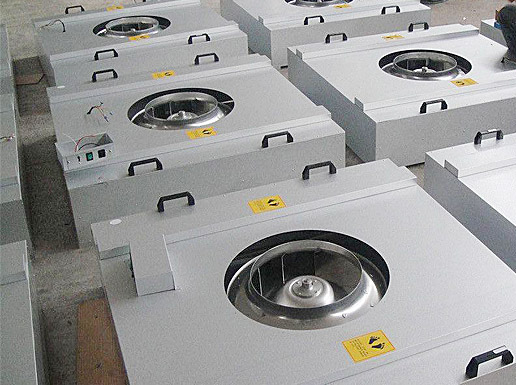
Which FFU size should you buy?
Choose FFU size by matching your cleanroom ceiling grid first—then confirm airflow at filter final pressure drop, housing height, motor platform, and control needs. Popularity of a catalog size is not a specification.
For metric cleanroom ceilings, four module families dominate buyer conversations:
| Module (mm) | Typical grid conversation | Senter fan platform (published) | Airflow cue (published) | Usual first shortlist |
|---|---|---|---|---|
| 1175×575 | About 1200×600-class / narrow bays | DC 310 external rotor | Stable mid-bay laminar supply | Corridors, service zones, mixed mid-class rooms |
| 1175×1175 | About 1200×1200 international grid | DC external rotor 400 | ≥2000 m³/h class | Large semiconductor, pharma, or food bays |
| 1175×875 | Large rectangular modules | DC external rotor 400 | About 1500 m³/h class | Wide halls needing group control |
| 615×615 | 600×600 ceiling systems | Internal rotor + 400 Al impeller | Compact-grid uniformity | Modular electronics / pharma 600 fit-outs |
Size is only one axis of the duty point; airflow at final filter pressure drop, cabinet height, noise target, voltage, and control interface complete it. The rest of this guide shows how grid geometry, ISO coverage, and fan platform interact—so you do not order a 1175×1175 into a 600×600 structure, or starve an H14 upgrade with an undersized fan.
Why cleanroom FFU sizes look “odd” (1175, not 1200)
FFU housings are sized to drop into nominal 600/1200 cleanroom ceiling grids while leaving edge clearance for gaskets, gels, or grid members. That is why you see 1175 and 615 more often than literal 1200×1200 metal boxes.
Think in two layers:
- Nominal grid — the architectural module people say aloud (“1200×1200 ceiling”).
- FFU envelope — the manufactured unit that must seal into that opening.
If your drawings say 1200×1200 but the FFU cut sheet says 1175×1175, that is usually intentional compatibility language. Still verify the exact opening, lip, and gasket system with the ceiling supplier. The same logic applies to 615×615 on 600×600 systems.
Size vs ISO class: coverage drives quantity
ISO class mainly changes how many FFUs you need (ceiling coverage and ACH), not which module size looks “premium.”
Typical planning ranges, as a starting point to verify with ACH and process particle generation:
- ISO 5: about 60–100% ceiling coverage
- ISO 7: about 25–40% ceiling coverage
A large ISO 5 critical zone may therefore pack almost a full FFU carpet—favoring whatever module matches the grid at high density. An ISO 7 packaging hall may use the same physical size family at much lower density, or mix sizes between process and gowning rooms.
A useful first-pass estimate for inquiries: coverage % × ceiling area ÷ module face area ≈ unit count (then validate with ACH and particle generation).
1175×575 FFU (DC 310 external rotor)
The 1175×575 FFU is the go-to shortlist when the ceiling module is a narrower 575/600-class bay and you want a compact DC external-rotor platform (Senter: DC 310) for stable laminar supply.
Best-fit patterns
- Electronics corridors and support cleanrooms
- Mixed ISO mid-range rooms where 1200×1200 is not the grid
- Retrofits that already standardized on 1175×575 openings
Watch-outs
- Do not assume the same m³/h as a 1175×1175 simply because both start with “1175.” Face area and fan platform differ.
- Confirm housing depth versus available plenum height for the 310 fan and filter stack.
- Write noise and final filter pressure drop into the inquiry—especially if operators work directly below.
Senter product cue: aluminized-zinc housing around the 0.8 mm class; DC 310 external rotor for cleanroom ceiling FFU duty.
1175×1175 FFU (DC 400, high airflow)
Choose 1175×1175 when your project speaks “international 1200×1200 grid” and you need a large-face, high-airflow module. Senter’s published cue is ≥2000 m³/h with a DC external-rotor 400 fan.
Best-fit patterns
- Semiconductor and microelectronics large bays
- Pharmaceutical or food halls with wide structural grids
- High-coverage designs where fewer seams per square meter of filter face simplify layout
Watch-outs
- High airflow on the nameplate still fails if final HEPA/ULPA pressure drop exceeds fan capability.
- Large modules are heavier—plan lift strategy and ceiling load.
- For continuously running fleets, evaluate EC/DC energy early. EC typically cuts energy by about 40–50% versus conventional AC, and as a rough planning estimate pays back in about 2–3 years when 50+ units run 16+ hours per day—depending on duty-point watts and local tariff.
1175×875 FFU (DC 400 + group control)
The 1175×875 format fits large rectangular ceiling modules when you need strong airflow (Senter about 1500 m³/h class) and centralized group control rather than only local dials.
Best-fit patterns
- Wide clean halls with rectangular grid geometry
- Campuses that balance multiple rooms from a BMS/Modbus layer
- Projects that expect night setback or zone-based speed trim
Group control is not a cosmetic option on large arrays. Remote speed and status monitoring reduces maintenance walkdowns and helps hold airflow as filters load.
Senter product cue: DC external-rotor 400 platform, about 0.8 mm aluminized-zinc housing, group-control module in standard configurations.
615×615 FFU (600×600 grids)
If your ceiling is a 600×600 system, shortlist 615×615 first. Senter’s published build uses an internal-rotor motor with a 400 aluminum impeller and a thicker 1.0 mm housing class for mechanical strength.
Best-fit patterns
- Modular electronics and optical assembly cleanrooms
- Pharmaceutical fit-outs standardized on 600 grids
- Brownfield upgrades replacing older 600-module FFUs
Watch-outs
- Internal-rotor versus external-rotor is a duty-point choice, not a hierarchy. Compare airflow, noise, and final pressure drop on the curve.
- Higher housing gauge (1.0 mm vs 0.8 mm) helps stiffness and corrosion resistance—still confirm coating and cleanability for the process.
- Quantity rises quickly on dense 600 grids; pair size choice with ACH or coverage math early.
For occupied electronics lines, noise-aware EC/DC platforms remain relevant even at compact sizes. EC FFUs are usually quieter at the same airflow because they can run slower, and they use less energy than fixed-speed motors—specify measured dB(A) at a stated distance and duty point.
Decision path: pick a size in under two minutes
Follow grid → airflow class → controls → filter pressure drop.
- What is the real ceiling opening or nominal grid?
- About 1200×1200 → start with 1175×1175
- About 600×600 → start with 615×615
- Narrow 575-class / 1200×600 talk → start with 1175×575
- Large rectangular module → evaluate 1175×875
- Do you need centralized speed or BMS on a large bay? Prefer 1175×875 (group control) or EC/DC networking on other sizes.
- Put filter final pressure drop and noise target on the inquiry before freezing the SKU.
- Convert ISO coverage % or ACH to unit count; add margin for loading and balance.
Specification checklist to include in your inquiry
| Spec to request | Why size alone is insufficient |
|---|---|
| Exact opening + gasket system | 1175 is not “any 1200 hole” |
| Airflow at initial and final filter pressure drop | Loading kills undersized fans |
| Housing height / plenum depth | Fan and filter stack collision risk |
| Motor platform (DC 310 / 400 / internal rotor) | Efficiency, noise, spare parts |
| Voltage and control protocol | OEM wiring and group control |
| Noise target at a defined distance | Occupied cleanrooms |
| Certificates mapped to SKU | CE / RoHS / ISO 9001 / 3C as applicable |
| Quantity + zoning drawing | Lead time and control architecture |
Particle limits remain anchored in ISO 14644-1. Filter grade language should stay consistent with EN 1822 (HEPA/ULPA at MPPS).
ISO 14644-1 classifies air cleanliness by airborne particle concentration limits; EN 1822 classifies high-efficiency filters by MPPS performance.
— ISO 14644-1:2015; EN 1822
How Senter Motor maps sizes to applications
| If your project looks like… | First shortlist | Second look |
|---|---|---|
| International 1200 grid, large high-airflow bay | 1175×1175 | 1175×875 if rectangular + group control |
| 600×600 modular electronics / pharma | 615×615 | 1175×575 for adjacent service corridors |
| Narrower metric module, DC 310 preference | 1175×575 | 1175×1175 if the grid upgrades later |
| Wide hall, zoned speed, BMS | 1175×875 | 1175×1175 for max face area / airflow class |
OEM/ODM buyers can still customize branding, interfaces, and documentation—but starting from the correct module family prevents expensive housing redesigns.
Conclusion
The right FFU size is the one that seals into your real ceiling grid and still hits airflow at final filter pressure drop—whether that is 1175×575, 1175×1175, 1175×875, or 615×615.
Use ISO coverage bands (about 60–100% for ISO 5, 25–40% for ISO 7) to estimate count, then lock motor/control and HEPA/ULPA grade against the fan curve. When you are ready to shortlist hardware, compare Senter’s four published modules on senter-motor.com and send grid plus duty-point data for an engineered recommendation.
References
- ISO 14644-1:2015 — Classification of air cleanliness by particle concentration
- EN 1822 — High efficiency air filters (EPA, HEPA and ULPA)
Surround
What is an FFU? Fan Filter Unit Guide for Cleanrooms
An FFU (Fan Filter Unit) is a ceiling module with a fan and HEPA/ULPA filter that supplies filtered laminar air to cleanrooms. Learn how FFUs work, how they differ from AHUs, and what to compare when you select one.
AC vs EC Motors in FFUs: Energy Savings & Payback
Compare AC vs EC/DC motors in cleanroom FFUs—efficiency, speed control, noise, group control, and when EC payback typically lands in the 2–3 year range for large fleets.