
超级管理员 Selection
HEPA vs ULPA for FFUs: Which Filter Grade to Spec
Compare HEPA H13/H14 vs ULPA in cleanroom FFUs—EN 1822, MPPS efficiency, pressure drop, ISO class pairing, and how to avoid low-airflow failures after a filter upgrade.
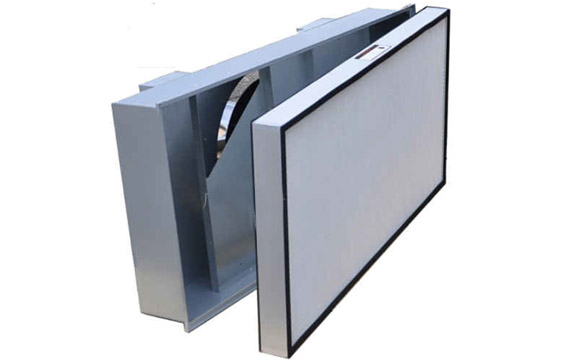
HEPA or ULPA in an FFU — which should you specify?
Specify HEPA (typically H13/H14) for most ISO 5–8 cleanroom FFUs. Choose ULPA only when the process truly needs higher collection efficiency on smaller particles—and only after confirming that the FFU fan can overcome both initial and final filter pressure drop.
Filter grade is not a status symbol. It is a pressure, energy, noise, and validation decision. Upgrading from H13 to H14 or ULPA without re-checking the fan duty point is one of the most common ways cleanroom projects create low airflow, hot motors, and failed particle counts.
EN 1822 classifies EPA, HEPA, and ULPA filters according to filtration performance at the most penetrating particle size (MPPS)—the shared language buyers and suppliers should use on FFU filter packs.
— EN 1822, High efficiency air filters (EPA, HEPA and ULPA)
What HEPA and ULPA mean (without the brochure fog)
HEPA and ULPA are high-efficiency filter classes; ULPA is the tighter group. In European classification practice under EN 1822, grades are defined by integral and local efficiency at MPPS—the particle size at which the filter is least efficient—not by a casual “0.3 µm marketing line” alone.
For FFU conversations, buyers usually meet these labels:
| Label in inquiries | Practical meaning in FFU projects |
|---|---|
| HEPA H13 | High-efficiency terminal filter; widely used mid-to-high cleanroom FFUs |
| HEPA H14 | Tighter HEPA class; common when ISO 5 / critical zones need more margin |
| ULPA (for example U15–U17 band in EN taxonomy) | Ultra-low penetration; reserved for demanding particle budgets |
H13 (≥99.95% per EN 1822) is a common choice for broader electronics, food, and mid-ISO applications, while tighter processes move toward H14 or ULPA. Treat that as a starting map, then engineer pressure drop and validation requirements.
Why MPPS matters more than a single micron slogan
Specifying filters by MPPS efficiency prevents false confidence from “% at 0.3 µm” claims that may not match how the filter is actually classified and tested.
MPPS thinking forces three honest questions:
- What efficiency do we need at the hardest particle size?
- What local leaks are allowed at the filter face?
- What pressure drop does that media and pack geometry create in our FFU frame?
Cleanroom classification still sits on ISO 14644-1 particle concentration limits. Filters are a tool to stay inside those limits; they are not a substitute for correct FFU count, coverage, and airflow stability.
ISO 14644-1 defines cleanroom air cleanliness classes by maximum allowable airborne particle concentrations at specified sizes.
— ISO 14644-1:2015
HEPA vs ULPA comparison for FFU buyers
Compare efficiency need, pressure-drop risk, energy and noise impact, and validation burden—then pick the lowest grade that still meets process risk.
| Dimension | HEPA H13/H14 (typical FFU) | ULPA (typical FFU) |
|---|---|---|
| Particle performance | Sufficient for many ISO 5–8 terminal supplies | Higher efficiency on challenging sizes |
| Pressure drop | Lower than ULPA for similar face velocity (generally) | Higher pressure drop → needs fan headroom |
| Energy and noise | Easier to hold airflow at moderate speeds | Often needs higher speed → more watts and dB |
| Cost and lead time | Broader availability | Higher pack cost / tighter QA |
| Best fit | Electronics, pharma suites, food, general clean engineering | Advanced semiconductor / critical optics / ultra-tight budgets |
| Biggest risk if mis-specified | Under-filtering a critical process | Over-filtering and starving airflow |
Acoustic and energy side effects are real. EC FFUs help because speed can rise smoothly as filters load. EC holds higher efficiency at part load, typically saves about 40–50% energy versus AC, and is usually quieter at the same airflow because it can run slower—but no motor technology rescues a filter pack outside the fan curve.
Pairing filter grade with ISO class and coverage
ISO class drives how many FFUs and often how tight the filter must be. Coverage ratios explain quantity, while process risk explains H13 vs H14 vs ULPA.
Typical planning ranges still apply as a starting point, verified with ACH and process particle generation:
- ISO 5: about 60–100% ceiling coverage
- ISO 7: about 25–40% ceiling coverage
| Scenario | Coverage / quantity cue | Filter conversation starter |
|---|---|---|
| ISO 7 packaging / assembly | About 25–40% coverage | Often HEPA H13 |
| ISO 5 critical bay | About 60–100% coverage | H14 common; ULPA if process demands |
| Mixed suite | Dense over critical tools, lighter elsewhere | Do not force one grade on every zone blindly |
More coverage with the wrong filter pressure drop still fails. Quantity and grade are coupled decisions.
The pressure-drop trap (where projects actually fail)
Every filter upgrade is a static-pressure upgrade request. If the FFU fan cannot deliver target airflow at final pressure drop, the cleanroom loses face velocity long before the media is “expired” on a calendar.
Typical failure pattern in filter-upgrade retrofits:
- Day-one HEPA H13 works at comfortable speed.
- Team upgrades to H14/ULPA “for quality.”
- Nameplate max airflow was never a duty point.
- Array runs loud, hot, or under-flow; ISO counts drift.
Non-negotiable inquiry fields
- Initial filter pressure drop
- Final (change-out) pressure drop
- Filter face area / pack type
- Target airflow at both points
- Motor platform (for example, DC 310 / DC 400 / internal-rotor 400)
- Noise limit at a defined distance
EC constant-flow or monitored trim strategies can compensate rising pressure drop within the motor’s envelope. They cannot invent static pressure the fan does not have.
Replacement strategy: when to change FFU filters
Replace HEPA/ULPA packs when pressure drop, integrity test results, or particle trends say so—not only when a generic “1–3 years” rumor says so.
Useful triggers:
| Trigger | What it tells you |
|---|---|
| Final pressure drop reached | Media loaded; airflow at risk |
| Integrity / leak test fail | Bypass or damage—replace now |
| Unexplained particle excursions | Investigate seals, fans, and filters |
| Abnormal noise / speed maxed | Possible loading or control issue |
Calendar intervals (typically planned at roughly 1–3+ years depending on load) are planning aids for spare inventory—not a substitute for differential-pressure monitoring, especially on dense ISO 5 arrays.
Decision guide: pick H13, H14, or ULPA in five checks
- Process risk: Will a single particle event scrap high-value product?
- ISO target: What class must be validated at the work plane?
- Fan headroom: Can the selected FFU hit airflow at final pressure drop?
- OpEx/acoustics: Acceptable kWh and dB with expected speed rise?
- QA pack: Certificates, batch data, and leak-test method required?
If checks 1–2 push ULPA but check 3 fails, change the fan/module platform (or reduce face velocity demand)—do not hope.
How this maps to Senter FFU modules
Senter modules are sized and fan-platformed first (grid + airflow + motor). Filter grade is then matched as an interface and pressure-drop problem on that platform.
| Module | Fan platform cue | Filter selection note |
|---|---|---|
| 1175×575 | DC 310 external rotor | Confirm H13/H14 pressure drop in a shallow stack |
| 1175×1175 | DC 400, ≥2000 m³/h class | Better headroom candidate for tighter packs—still verify |
| 1175×875 | DC 400 + group control | Use networked speed trim as filters load |
| 615×615 | Internal rotor + 400 Al impeller | 600-grid projects: match pack to 1.0 mm housing design |
OEM/ODM buyers should specify filter frame standards and gasket/gel preferences early so private-label cosmetics do not conflict with integrity testing.
Inquiry text you can paste to suppliers
Filter pack
- Grade: H13 / H14 / ULPA (EN 1822 class)
- Initial pressure drop: ___ Pa @ ___ m³/h
- Final pressure drop: ___ Pa
- Face size / frame style: ___
- Integrity test method required: ___
FFU fan
- Module: 1175×575 / 1175×1175 / 1175×875 / 615×615
- Target airflow at final pressure drop: ___ m³/h
- Noise target: ___ dB(A) @ ___
- Control: 0–10 V / Modbus / other
Conclusion
Use HEPA H13/H14 as the default FFU terminal filter for most ISO 5–8 projects. Step to ULPA only for justified process risk—and treat every grade choice as a final pressure-drop choice against the fan curve.
Keep EN 1822 and ISO 14644-1 in the written spec, plan quantity with coverage bands (about 60–100% for ISO 5, about 25–40% for ISO 7), and demand operating-point data at final filter pressure drop. Shortlist hardware on senter-motor.com, then send grade, pressure drop, and module constraints for an engineered HEPA/ULPA recommendation.
References
- EN 1822 — High efficiency air filters (EPA, HEPA and ULPA)
- ISO 14644-1:2015 — Classification of air cleanliness by particle concentration
Surround
External vs Internal Rotor Fans for Cleanroom FFUs
Compare external-rotor vs internal-rotor FFU fans—compact depth, airflow, noise, DC 310/400 platforms, and how to select by duty point rather than architecture labels.
FFU Noise Control: dB Specs That Actually Matter
How to specify cleanroom FFU noise—dB distance, duty-point speed, EC vs AC, filter loading, and inquiry language that prevents “quiet on paper, loud on site.”